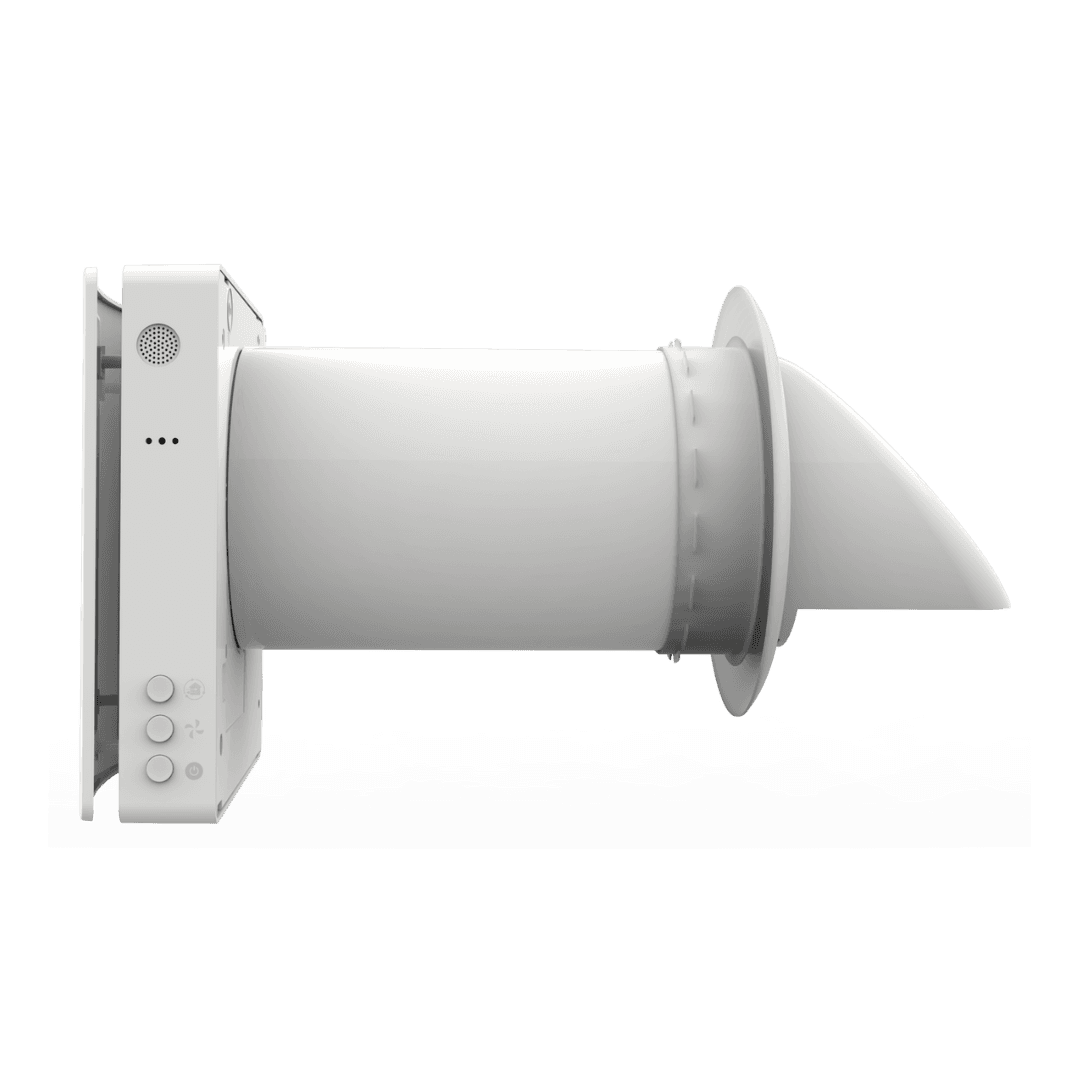
Energy Recovery Ventilation: The Overlooked Efficiency Lever

In Thailand's tropical climate, air conditioning accounts for up to 60% of a commercial building's electricity consumption. Fresh air intake is necessary for occupant health and comfort, but it brings in hot, humid air that the cooling system must work hard to condition. Energy Recovery Ventilation solves this by preconditioning incoming air using the energy in the exhaust air stream.
How ERV works
An ERV unit contains an enthalpy exchange core — typically a rotating wheel or fixed-plate heat exchanger — that transfers both sensible heat (temperature) and latent heat (humidity) between the outgoing exhaust air and incoming fresh air. On a 35°C day with 70% relative humidity, a good ERV core can precondition incoming air to roughly 28–30°C with significantly reduced moisture content, slashing the cooling load by 30–40%.
Where ERV delivers the best ROI
ERV is particularly effective in facilities with high ventilation requirements: clean rooms, laboratories, pharmaceutical manufacturing, commercial kitchens, gyms and large office floors. The higher the fresh air intake requirement, the faster the payback. Most installations in Thailand achieve ROI within 2–3 years through reduced chiller and compressor runtime.
Indoor air quality bonus
Beyond energy savings, ERV improves IAQ by maintaining CO₂ levels within ASHRAE standards without overcooling. Occupants report fewer complaints about stuffiness, and facilities managers see reduced peak demand during the hottest hours of the day.